
Shane McFarland, Part II

In the second part of an interview with The Tennessee Mockingbird, Murfreesboro Mayor Shane McFarland discusses his recent trip to North Korea. Part One of the interview is available here.
Mockingbird: We’ve covered quite a bit of the time you spent in Pyongyang. Can you talk about Nampo and what happened there with your efforts to establish a sister city relationship?
McFarland: Sure, and as I said earlier, I wish that I could have stayed longer in Nampo, but not just because of the sister city thing. When you’re there, you get the sense that you’re experiencing more of the “real” North Korea - or at least as much of it as the government allows you to see.
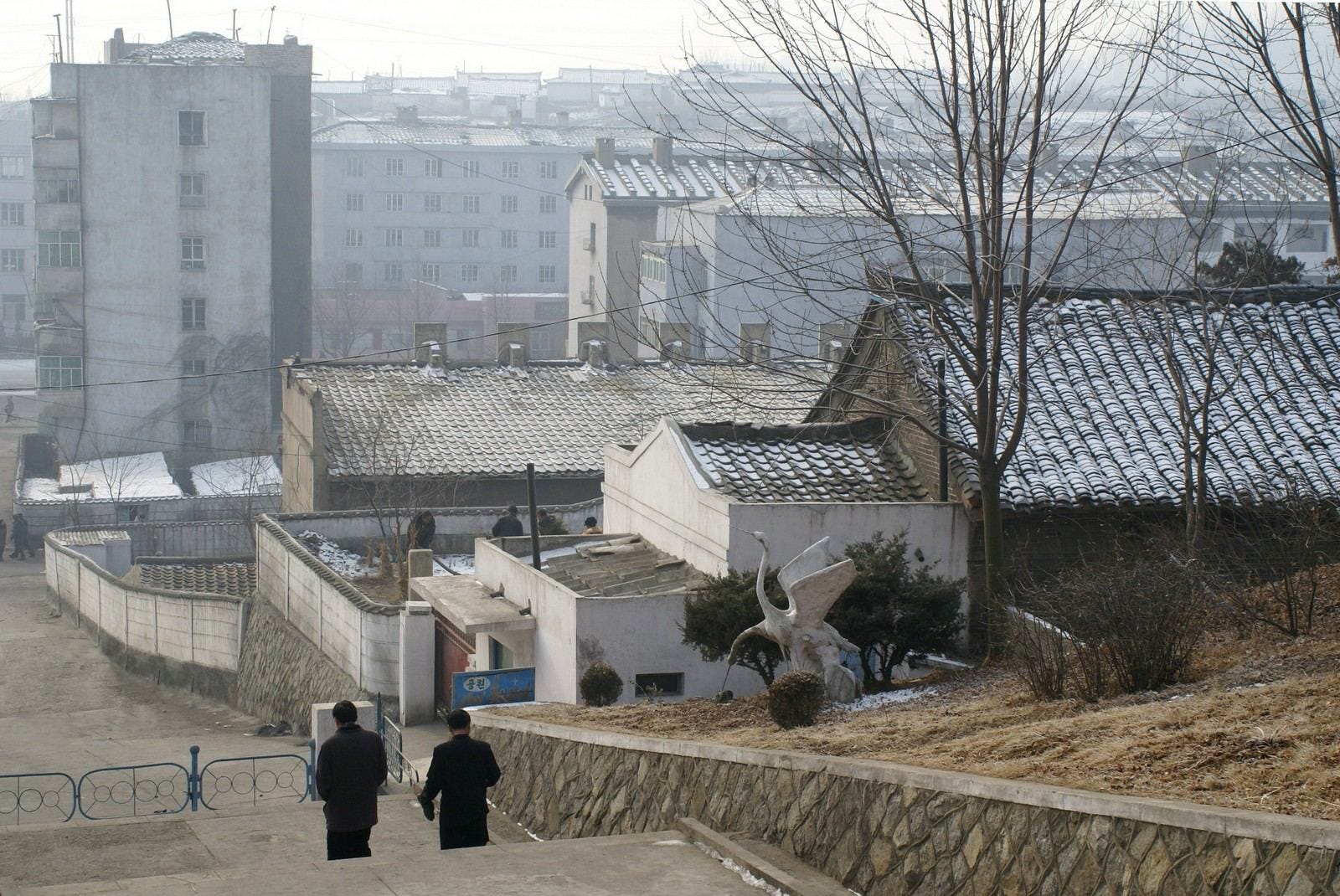
Mockingbird: They drove you to Nampo on that big empty highway?
McFarland: That’s right. I think we saw maybe three or four other cars during the entire drive, and those were all government vehicles. I was finally no longer constipated by that morning, so the drive was much more enjoyable than it might have been a couple of days earlier. The distance from Pyongyang to Nampo is about the same as going from downtown Murfreesboro to downtown Nashville, and I told Min-ji that I wished driving on I-24 was as easy and free of traffic as North Korean highways. As soon as we arrived in Nampo, there was another awkward moment like the ones I had in Pyongyang, but this time it wasn’t my fault.
Mockingbird: No new attempts at entertaining them with your jokes?
McFarland: (laughing) Not really, just one joke from me, but they did entertain me - quite unintentionally though. When we got out of the car, the members of the Nampo welcoming committee were there to greet us, and I noticed that they were all wearing cowboy hats, boots and other antique western apparel like something from the late 1800s. So, of course, my immediate thought was OK, they’re under the impression that this is how we dress in Tennessee, and I asked Min-ji if the group was planning a Nashville bachelorette party.
Mockingbird: How did she respond?
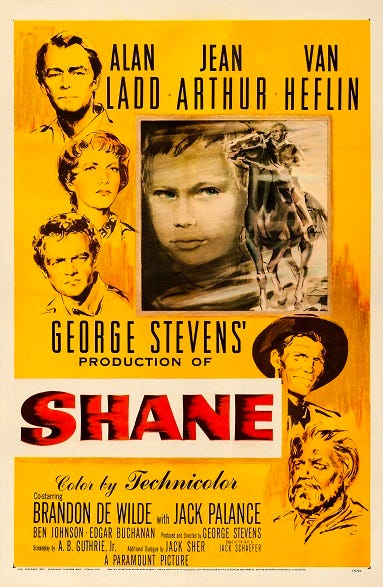
McFarland: Once again, I realized that I probably should have kept my mouth shut, since she really had no idea what I was even talking about. And right after I had asked her the question, I noticed that the people in the welcoming group were holding up a big banner that read: Shane! Shane! Come back!
Mockingbird: From the movie
McFarland: Exactly. The famous closing line of the movie Shane from the 1950s. And so at that point I realized that the costumes didn’t have anything to do with the fact that I’m from Tennessee. They were dressed up like the characters from the film. It seemed like maybe a few of them were puzzled that I was wearing a suit, so that made me wonder if they were expecting “Shane” to ride into Nampo on a horse. But even funnier than that, I don’t think any of them had actually even seen the movie, so they really didn’t know anything about it other than my name was the same as the title.
Mockingbird: It seems like at least one of them must have seen it to know about the costumes.
McFarland: Right, maybe one of the higher ups from Pyongyang, but an American film - especially one from around the time of the Korean War - would have always been banned for viewing by the general public. That’s what made the whole thing so strange - like pretty much everything else in North Korea.
Mockingbird: Did they stay in costume later when you were talking about the sister city idea?
McFarland: Not really. I think one or two still had a belt or a hat when we got to that point. Something I should mention is that we really didn’t talk about the sister city idea, but rather talked around it. I spent four days with them in Nampo and never got a straight answer to any of my questions - which was frustrating because back in Pyongyang, they had told me that Kim Jong Un had approved the idea personally.
Mockingbird: Did they hold up the “Come Back Shane” banner again when you left?
McFarland: (laughing) No, only when I arrived! My departure was much less dramatic. While Dae-Seong was putting my luggage in the car, the local Party Chairman gave me two little pins for my jacket - one with a North Korean flag on it and one with a picture of Kim Il Sung. Then our car drove straight to the Pyongyang airport, and I was on the plane back to Beijing about two hours later.
Mockingbird: So, if you were going to summarize your ten days in North Korea, what would you say was the biggest takeaway from the experience?
McFarland: I would have to say that the whole experience was really this serendipitous kind of thing, where even though my original purpose for going over there was to establish a sister city relationship, what ended up happening was something completely different.
Mockingbird: Completely different in what way?
McFarland: Different in the sense of how it affected me personally. I never expected to be so personally touched and moved by the greatness of the Kim family - especially the two senior Kims, since they’re both dead. But like I mentioned earlier, that mystical and spiritual connection that I felt with both Kim Il Sung and Kim Jong Il while I was bowing before their statues in Pyongyang really changed my life in a profound and almost magical way. And what I realized was that I had discovered what was missing in my own life - and by extension what was missing in the life of my city. And so I’ve brought that missing piece back here in my mind, but now I also want to make it a reality on the ground.
Mockingbird: It kind of sounds like you’re hinting that you want to make Murfreesboro a little bit more like North Korea.
McFarland: Yes, that’s correct, but let me be very clear about what my intentions are. I do want to make Murfreesboro more like North Korea, but only in a very limited way. I’m not at all talking about making the transition to a command economy, or to government ownership of industry, or any other aspect of North Korean communism in an economic sense. I’m still a committed capitalist, and I don’t see that changing anytime soon - or at least not as long as the local housing market remains strong. But what I am talking about is adopting the North Korean model in a leadership sense - meaning a cult of personality, built solely around me and my image, but modeled on the one established and perfected by Kim Il Sung and Kim Jong Il, and continuing to this day with Kim Jong Un.
Mockingbird: And is this something that you believe the people of Murfreesboro will be amenable to?
McFarland: The honest answer is no, probably not - at least not entirely. And as much as I like to fancy myself an idealist, you have to be realistic about things like this and understand that you’ve likely already lost the older ones. That ship has sailed. The younger generation, however, is a completely different story, and I’m already working on implementing a plan to bring them on board.
Mockingbird: And what is this plan?
McFarland: The great thing about our Murfreesboro city schools being preschool through 6th grade is that those are the critical years for indoctrination, whether you’re talking about Cuba, where the focus is more on the system itself, or North Korea, where it’s more about the personality cult of the leader. And that North Korean version of early education about the leader is the one I’m wanting to put into practice.
Mockingbird: When you say early education about the leader, you mean teaching Murfreesboro elementary school students to show respect, reverence and awe for you personally in the same way that the North Korean schools do with the members of the Kim family?
McFarland: Correct, and a good example of what I’m referring to is the way they handle the birth story of Kim Jong Il. Starting at an early age in their schools, North Korean students learn that he was born in a secret hidden location on a North Korean volcano called Mount Paektu, and that a swallow and other birds, stars, rainbows, and lots of animals and other wondrous creatures all miraculously came into being at the same time as his birth, or something like that. I can’t remember the exact story, but that’s the gist of it.
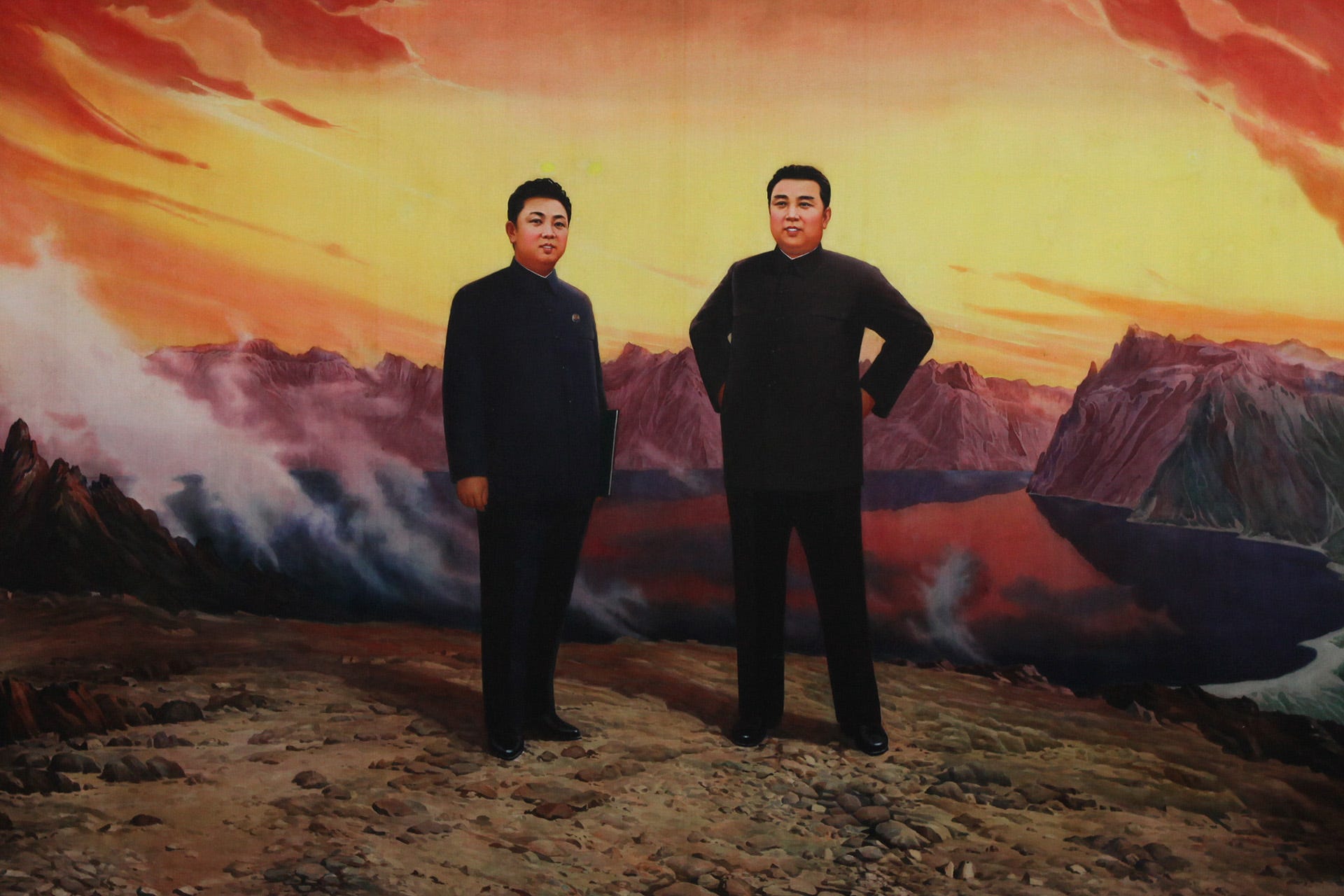
Mockingbird: And you’re wanting to create a myth like Mount Paektu about yourself and have it taught in Murfreesboro city schools?
McFarland: Yes, but let me explain my reasons, because I know that can come across as being a little strange when you first hear it. What you always have to keep in mind with me is that I’m not like the Murfreesboro mayors who preceded me. I’m different because I’m younger and I’m an outsider. And even though I’ve lived here for a long time, and I grew up just an hour down the road, I can never change the fact that I wasn’t actually born and raised in Murfreesboro.
Mockingbird: I would think that’s not such a big deal these days compared to when Murfreesboro was a smaller city.
McFarland: It’s less of a factor for sure, but it’s still important. If you look back at the history of past mayors, what are the names you see? Maney, Murfree, Jones, Reeves - all these old families who have been here for generations. My immediate predecessor, Tommy Bragg, is another one. His dad was in the legislature for decades and still has a legendary reputation nearly twenty years after his death. I don’t have that history. My family is pretty well-known and established around the Monteagle and Grundy County area, but I’m not the mayor there. I’m the mayor here, and since I can’t rewrite the actual history of my life, I need to create a mythological version.
Mockingbird: So, you’re wanting to create a sort of “McFarland Mythology” based on the North Korean mythologies of Kim Il Sung and Kim Jong Il?
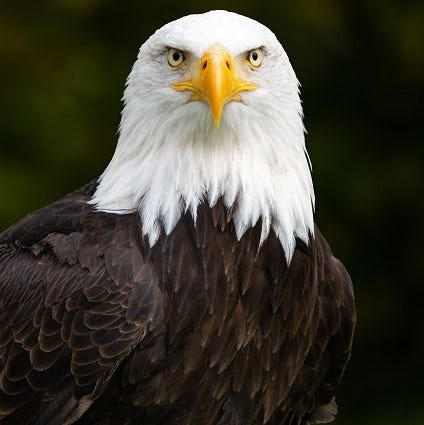
McFarland: Correct, but I’m not going to copy the Kim version exactly. First of all, it needs to be my own unique and original story, and second, I want to be careful not to be disrespectful to the Kim family. But the great thing about it is that lots of my personal history actually fits pretty neatly into the new version of the myth. We can substitute Monteagle for Mount Paektu and say that it was an eagle instead of a swallow.
Mockingbird: And there really were lots of eagles up there in Monteagle at one point in time, right?
McFarland: That’s right, that’s where the name came from. Actually, one idea I’ve been toying with is creating a myth in which I originally was an eagle and, inspired by a selfless desire to offer the gift of myself and my leadership, I flew from Monteagle down to Murfreesboro, where I was magically transformed into the man now known as Shane McFarland.
Mockingbird: And you think people will believe this?
McFarland: One thing you learn if you’ve been in and around politics long enough is that you can make people believe anything. You just have to keep repeating it over and over and always sound like you believe it too.
Mockingbird: So, is this early education going to be limited just to your mythology?
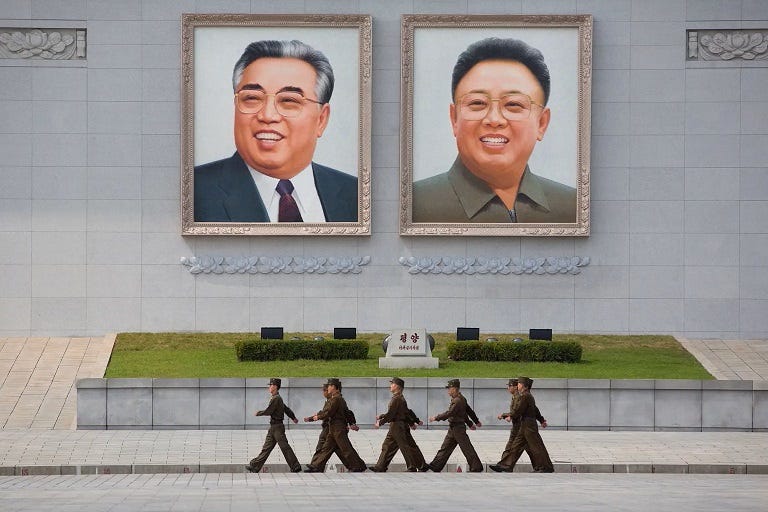
McFarland: Not at all. One of the other things that I noticed while I was in North Korea is that the portraits of the two senior Kims are everywhere. Wherever you go, inside, outside, on the subway, outside a building, the faces of Kim Il Sung and Kim Jong Il are staring at you. And that really got me thinking - why can’t we do the same thing in Murfreesboro?
Mockingbird: So, you’re wanting to have portraits of yourself displayed in classrooms?
McFarland: Yes, well, obviously in classrooms, but I don’t want to limit it just to the schools. I want my face to be everywhere you go in Murfreesboro, just like the faces of the Kims are in Pyongyang.
Mockingbird: How many of these portraits are we talking about exactly?
McFarland: Let’s say one for each household, which means around 60,000 for every house and apartment, then at least one for every business, but probably more than that. With businesses where you have multiple offices, we would want one in each office or each room. Oh, and don’t forget about MTSU - there needs to be one in every room of every building and dorm on campus, so that’s like another 5,000. Altogether I’d say we’re looking at around 100,000 portraits.
Mockingbird: And how much will people have to pay for these?
McFarland: Nothing! The city is going to pay for them, and I’ve already got Craig working on a distribution plan. I mean, if some people want to make a donation, then good for them, and it would be greatly appreciated. But the plan is to distribute them free of charge to the whole city.
Mockingbird: That number of portraits seems like quite an undertaking.
McFarland: Well, the good thing about the portraits is that I have Bill, and he’s promised me that he’ll have them ready by the end of the month, even if he has to work nights and weekends.
Mockingbird: You’re referring to Bill Shacklett?
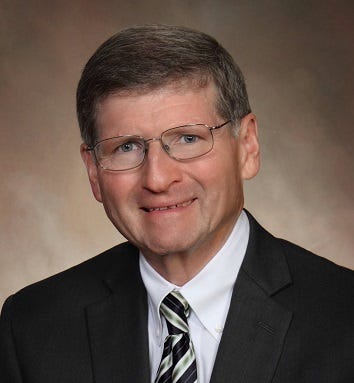
McFarland: That’s right. Bill is one of our City Council members and also the current Vice Mayor. But more importantly, he’s been a photographer for like, a long time - longer than I’ve been alive. The other great thing about Bill - which by the way most people aren’t aware of - is that he’s also a brilliant sculptor. Over the years he’s sculpted nearly a hundred statues, mostly neoclassical and equestrian, but also a few in a more modern style. So in addition to working overtime on my portraits, I’ve also got Bill working on the Shane McFarland statues that we’re going to place in strategic locations all around Murfreesboro.
Mockingbird: When you say statues, you mean like the big statues of Kim Il Sung and Kim Jong Il?
McFarland: Right, so the plan for the statues is modeled after the ones in Pyongyang. There will be a central gigantic Shane McFarland statue, which will be downtown in the plaza space - about equidistant between city hall and the library - and it will be about 60 feet tall. That’s a few feet shorter than the North Korean statues - again, just like with my mythology story, I don’t want it to be perceived as being disrespectful to the Kim family. So about 60 feet total, with the statue itself being 50 feet and the base about 10 feet. And then we’ll also have a few dozen other smaller ones in front of the schools and other public buildings that will be about 20 feet tall.
Mockingbird: Will there be any sort of text inscribed on the base of these statues other than your name?
McFarland: Oh yes, definitely. We’re going to have inscriptions of all my accomplishments, whether real or imagined. And also there will be a different poem about me on each statue, with the entire poetry collection being taught in our schools. It’s going to be modeled on the North Korean poetic style, which quite often is sung instead of spoken.
Mockingbird: Are you going to let the public participate in writing these poems or maybe even have a poetry contest?
McFarland: No, I’m going to compose all the poems myself. That’s something I wouldn’t feel comfortable trusting to anyone else. I’ve actually already been working on them and have a few completed already, which I’d like to read to you now if we have time.
Mockingbird: Sure, go ahead.
McFarland: Here’s the one I feel best encapsulates my relationship with the city…
Murfreesboro in the rain
Pining, waiting for her Shane
Will she see him? Will he her?
Can she even hear that whir
Of steady wings that fly so near?
Bringing hope and joy and cheer
His name she knows and so demands
Stay with me now my love McFarland
Mockingbird: Nice.
McFarland: Powerful right?
Mockingbird: It’s cute.
McFarland: Beautiful but also very powerful. You see the way it shows what I was talking about earlier about me being an eagle flying down from my mountain, bringing the gift of myself to the city that adores me?
Mockingbird: I get it.
McFarland: I’ve also written some haikus.
Mockingbird: Aren’t those Japanese?
McFarland: Well, technically yes, but it’s the same general part of the world as Korea, right? Here’s the first one….
he who would lead us
shouts softly at silent skies
and the name is shane
Mockingbird: Interesting.
McFarland: Do you see the hidden meaning in it?
Mockingbird: I’m not sure.
McFarland: Take a guess. What do you think?
Mockingbird: It kind of sounds like the “Old Man Yells At Cloud” meme.
McFarland: No, no, that’s not - hang on here’s another one…
like midnight raindrops
the pitter patter footsteps
of shane mcfarland
Mockingbird: I’m not really following that one either.
McFarland: No? I thought the message was crystal clear.
Mockingbird: It sounds like you’re tiptoeing around on rooftops in the middle of the night.
McFarland: No, OK, well, I guess the good thing about teaching these in our schools is that the meaning will be explained to the students. They’ll be responsible for not only memorizing and reciting the poems themselves, but also for understanding the correct interpretation.
Mockingbird: So, McFarland stories and McFarland poems in school, McFarland portraits hanging in every building in Murfreesboro, and McFarland statues scattered all around the city. Is there anything else we haven’t covered?
McFarland: Oh yes, actually I forgot about the Arirang Festival. We’re going to do our own McFarland version of that too.
Mockingbird: What is that exactly?
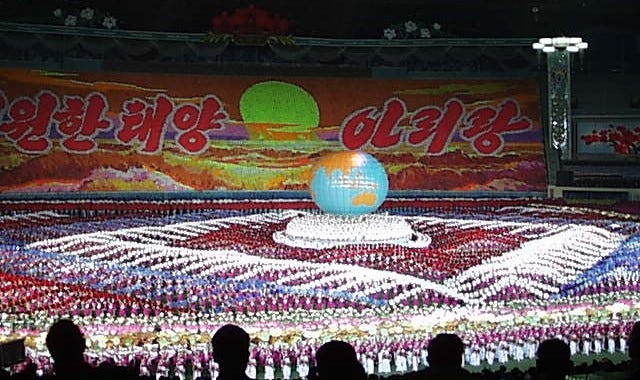
McFarland: I’m sure you’ve seen clips of it on TV before. The Arirang mass games is a giant festival where the North Koreans have tens of thousands of gymnasts, dancers, and other specially selected participants. They do this sort of synchronized colorful display in their huge stadium in Pyongyang where they spell out words and make pictures.
Mockingbird: Oh right. I didn’t know that it had a specific name. Where will this take place?
McFarland: At MTSU. That’s really the only place in Murfreesboro where it would work. It won’t be quite as spectacular as the Arirang, since the North Korean stadium is one of the largest in the world. But Floyd Stadium should still hold enough people that the performers will be able to spell out my name and create a picture of my face.
Mockingbird: And the university was willing to let you use the stadium for this?
McFarland: Well, there was actually some reluctance and dithering from the administration, but once I agreed to have our performers spell out “McPhee” along with “McFarland” everything fell into place. I wasn’t really thrilled about having to share the spotlight, but sometimes you do whatever it takes to make it work. That’s another important lesson from years of being in politics - the art of compromise. I guess I should say it’s something you learn from American politics. Kim Jong Un doesn’t really have to compromise, and I’d be lying if I said that I wasn’t a little jealous of that particular advantage that he enjoys.
Mockingbird: Speaking of the Brilliant Comrade, one final question - are you planning to adopt the Kim Jong Un haircut?
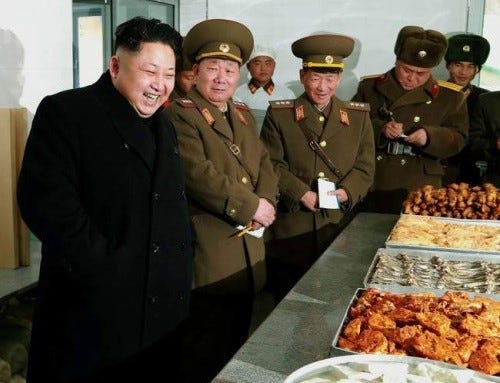
McFarland: (laughing) No, you have to draw the line somewhere, and in this case that line is my hairline! I am going to have Craig and a few others from the city administration start following me around with little notepads to write down my on-the-spot-guidance everywhere I go. The way Kim Jong Un does that with his entourage is brilliant and worthy of imitation, but as far as the haircut goes, I have to say no.
Mockingbird: Well Mayor, thanks again for sharing part of your day with us. This has definitely been one of our most informative interviews, and I hope we can have you back again soon to talk more about the progress of your new programs.
McFarland: Thank you for having me, and I’d be glad to come back anytime!