
Shane McFarland, Part I

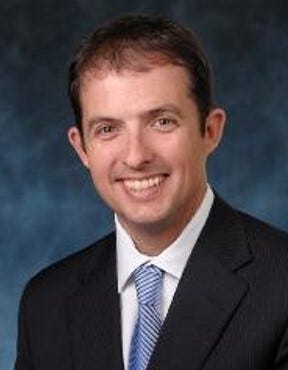
In Part One of an interview with The Tennessee Mockingbird, Murfreesboro Mayor Shane McFarland discusses his recent trip to North Korea.
Mockingbird: Good morning Mayor - thanks for joining us.
McFarland: Hi, thanks for letting me be with you today. I’ve been looking forward to it! I should probably warn you before we start that I just got back around 4:00 this morning and haven’t slept since I left North Korea.
Mockingbird: I’m sure you’re tired, so we’ll try to make it easy. You’ve probably been getting swamped with questions about the trip already this morning, right?
McFarland: I think I have more than 60 texts so far, and my voicemail is already full. After we finish up with our interview, I’m running over to WGNS to talk to them about everything, and then I have another interview scheduled with Broden later this afternoon.
Mockingbird: Well, let’s kick it off this morning with how the idea for all this got started in the first place. Could you talk a bit about your reasons for going to North Korea and then we’ll get into what happened while you were over there?
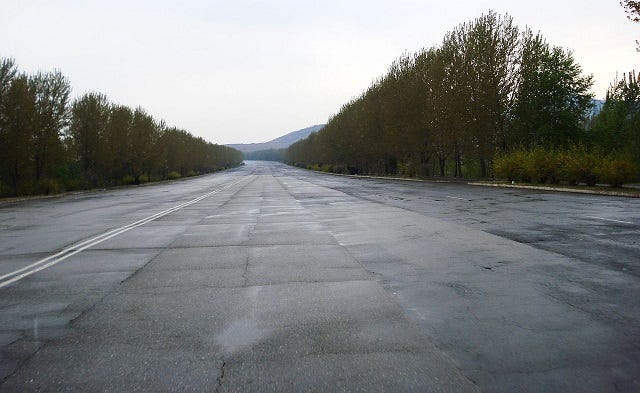
McFarland: Sure, my initial motivation for the trip was to establish a sister city relationship between Nampo and Murfreesboro. Nampo is the second largest city in North Korea after Pyongyang, and it actually has a lot in common with Murfreesboro in the sense that it used to be a much smaller town that has experienced tremendous growth. It’s also about the same distance from Pyongyang as Murfreesboro is from Nashville, so we have that in common too. There’s a big highway between the two cities as well, similar to I-24, except for the fact that there are never any cars on it.
Mockingbird: Did you spend most of your time there in Nampo?
McFarland: About half the time. I was there for five days and in the capital for four, and I also spent one day on an excursion to the DMZ. My preference would have been to spend more time in Nampo, but the issue there, like with everything in North Korea, is that you really don’t have a choice. The government determines your agenda through one of its designated tourist agencies, and then you have to follow that agenda pretty rigidly.
Mockingbird: No flexibility at all?
McFarland: Almost none. Maybe a little with the time of day you have breakfast and go to the toilet, but that’s about it.
Mockingbird: Did you communicate directly with that North Korean agency before the trip?
McFarland: Yes, very frequently - and there again, it’s a situation where you have to play by their rules. We had sent out some initial feelers to the North Koreans about the sister city idea, and they responded with “OK, here’s who you need to talk to and work with,” and so from that point on, I dealt exclusively with their designated agency.
Mockingbird: Was that an easy process, talking to and working with the North Koreans?
McFarland: (laughing) Well, I suppose the old adage about the journey being greater than the destination would be an appropriate description of the process. The actual time that I spent in the country was ten days, but the time it took to get everything approved and arranged was closer to ten months. It’s not like a vacation to Europe or the Caribbean, where you can book a last-minute weekend to the Bahamas or hop on a plane to London. You have to have your North Korean visa and your complete itinerary approved well in advance of your trip, and so there were lots of phone calls, emails, and faxes back and forth during those ten months.
Mockingbird: I would imagine it’s also more complicated due to you being a U.S. citizen, right?
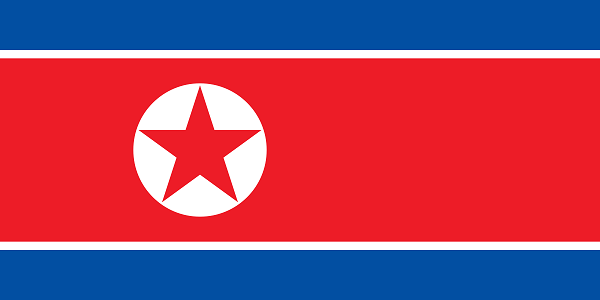
McFarland: Absolutely. For starters, your visa has to be issued by a North Korean embassy or consulate, but there isn’t one in the United States, since we don’t have diplomatic relations with them. Technically, they have their UN mission here, but that office doesn’t issue visas, so you have to obtain it from one of their embassies in another country. And by the way, you also have to get special approval from our government too before you can even think about starting the visa application with the North Koreans. The U.S. has had that rule in place since 2017. So yes, being an American adds an extra layer of complexity to something that’s already a complicated process.
Mockingbird: You mentioned already that you haven’t slept the last day. The journey itself - flying over there and back - that’s kind of an exhausting ordeal too, right?
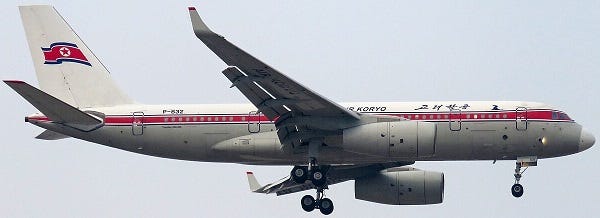
McFarland: That’s right. It was the longest - and this is no exaggeration - the longest series of connections and layovers in different airports that I’ve ever been through. First you have to fly from Nashville to San Francisco, which is almost five hours, and you have your first layover there. Then you fly from San Francisco to Shanghai and then Shanghai to Beijing. Those legs combined with the layovers were around 28 hours and then, finally, you fly from Beijing to Pyongyang on Air Koryo, which is North Korea’s national carrier. That last leg is about two hours, and even though you’re exhausted from all the time you’ve been traveling, you’re still energized and excited by the realization that you’re about to land in the “forbidden” hermit kingdom of North Korea.
Mockingbird: And then what happens after you land?
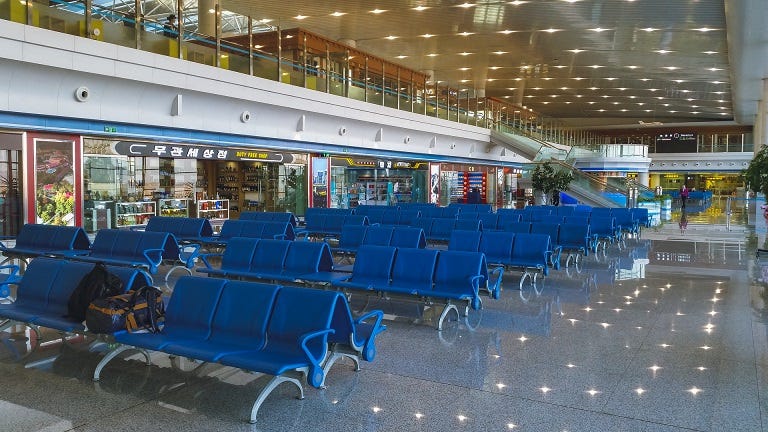
McFarland: The Pyongyang Airport was one of the more interesting parts of the trip for me in the sense that there was really nothing very interesting or exceptional about it at all. You go through immigration and customs just like any other country, and it even looks pretty much the same as the airports in the Bahamas or Jamaica or Costa Rica. Maybe not quite as nice as London or other European airports, and it definitely has that “developing country” vibe like the Dominican Republic, but it still feels very normal.
Mockingbird: And when you’re going through customs, this is the point where you have to give them your phone for the duration of your trip right?
McFarland: Actually no!
Mockingbird: Really?
McFarland: No, they used to keep your phone, but they stopped doing that a few years ago. You get to keep it with you the entire time you’re there. They tell you to turn off the GPS function, but they don’t really check before you leave the customs area. My contact person with the tourist agency had already told me that I would be allowed to keep it, but in the back of my mind, I was still wondering whether or not they would make me hand it over. So that’s another reason that the airport experience seemed surprisingly normal to me.
Mockingbird: And then does your contact person meet you there at the airport?
McFarland: Yes, that’s the very next step after customs, and there were actually three people who were there to greet me. There was Nari from the agency, and I had already been emailing back and forth with her for several months. Then there was Min-ji, and she was my official tour guide and “minder” for the ten days that I was in the country. And then Dae-Seong was our driver. He barely spoke any English, but the two ladies were more or less fluent.
Mockingbird: Were you able to rest for a while after all that traveling?
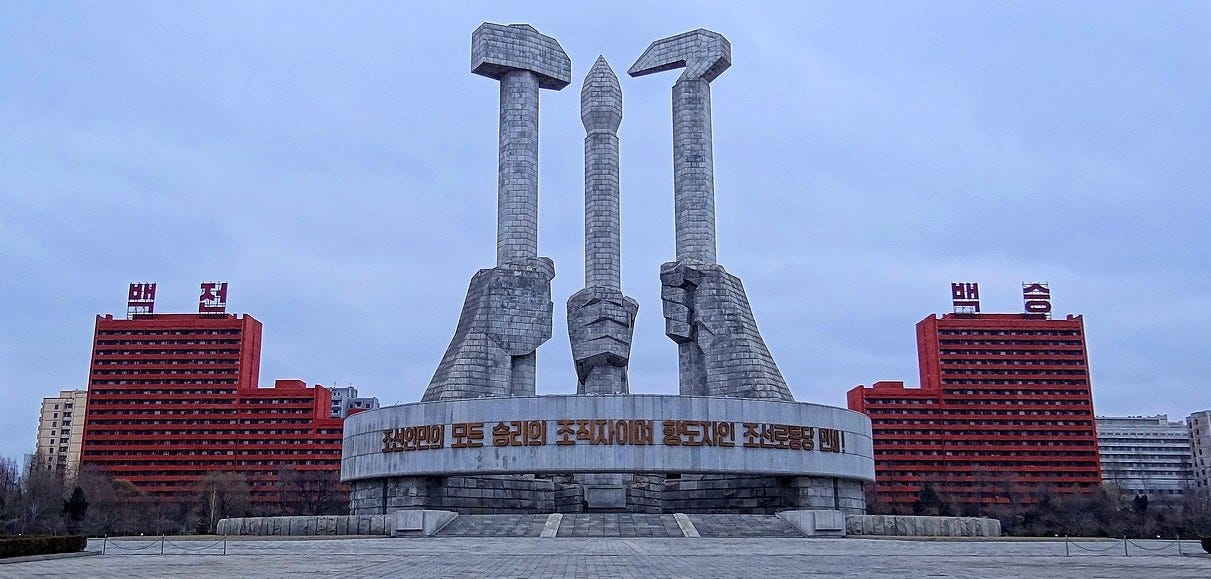
McFarland: Unfortunately, no. We went straight to the hotel, and they only gave me about ten minutes to get checked in and put my luggage in the room. I was constipated from all the traveling, so an hour or two would have been preferable, but you’re always on their schedule not your own over there. So, after my allotted ten minute “break” at the hotel, my tour of Pyongyang officially began, and it’s a whirlwind of a tour. Again, you don’t get to choose where you go and what you visit. Everything is determined in advance. Dae-Seong drove us around to the museums and other places they want you to see, starting with the Party Founding Monument.
Mockingbird: Party meaning the Communist Party?
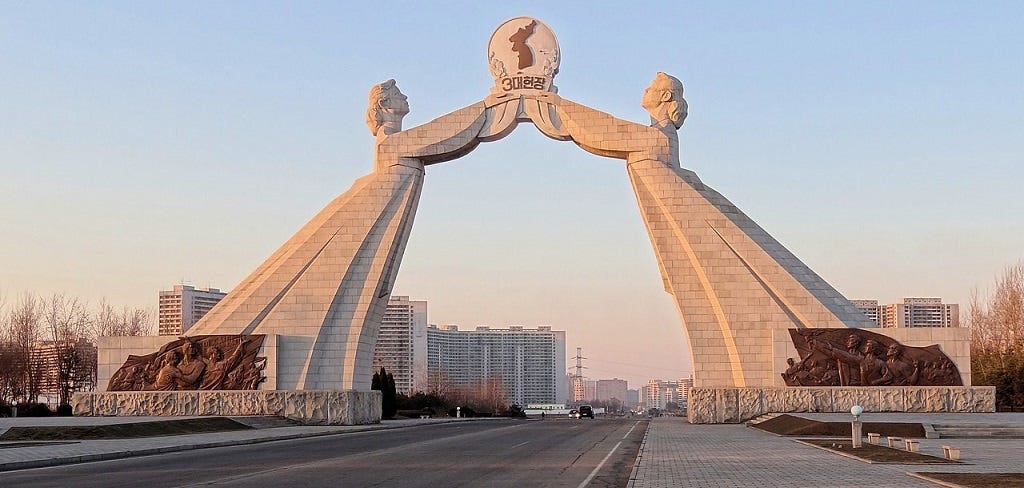
McFarland: The official name is the Workers’ Party of Korea, but yes, it’s communist in ideology. The biggest difference between the WPK and communist parties in other countries is that they’ve added reverence for the Kim family as one of their tenets along with their stated goal of reunification of the Korean peninsula (under WPK rule of course). And their monument to that reunification goal - the Reunification Arch - was actually the very next stop on our agenda.
Mockingbird: Do they really still believe that’s a realistic proposition? Reunification with the South but the with North in charge of everything?
McFarland: They say they do and act like they do, but it’s hard to figure out what their true beliefs are. I had to listen to a lecture from Min-ji while we were at the Arch about the Kim Il Sung reunification plan from the 1970s and the evils of American imperialism. You kind of tune it out after a few minutes. And by the time she had finished talking, it was starting to get dark, so at that point they drove me back to the hotel.
Mockingbird: Were you able to sleep OK that first night?
McFarland: Definitely. I was so tired that I could have fallen asleep on the concrete at one of those monuments. But I was one of the few people staying at the hotel, so it was very quiet, and I slept straight through the night. The next morning, I was still constipated, but other than that I felt fantastic. That second day was more of the same as far as visiting museums and monuments, but I also had my meetings with a few government officials in the morning.
Mockingbird: Were you able to meet with Kim Jong Un?
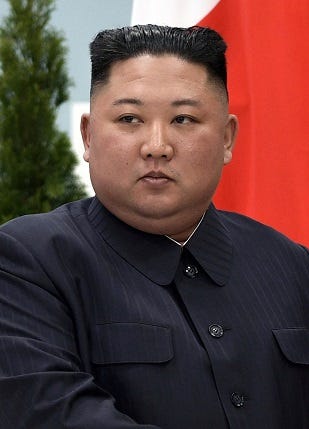
McFarland: Not personally, no. I did get to meet with one of the members of his inner circle, which was interesting. The information that I received from that official, which, of course, is always a little suspect when you’re dealing with the North Korean government, was that Kim Jong Un was very open to my sister city idea and had actually given the green light for my visit himself. But no, I never got to meet him in person while I was there.
Mockingbird: I’m assuming that a tour of the concentration camps was also not part of your agenda?
McFarland: (laughing) No, they skipped over those for some reason! Obviously, it’s a touchy subject for them, and I actually committed a faux pas at one point when I was talking with Min-ji. I was explaining to her that crime in Murfreesboro has been increasing lately and asked if they could maybe let me use one of their prison camps as a way of getting it under control.
Mockingbird: And how did she respond?
McFarland: (laughing) I knew right away that I’d put my foot in my mouth. She got an almost terrified look of anxiety on her face and stepped away to make a phone call. No idea who she was talking to, but when she came back, she had composed herself and was smiling. She told me calmly that “this was not possible, because there are no such camps in the DPRK” and then we continued the tour like nothing had happened.
Mockingbird: Did she think you were asking a serious question instead of joking?
McFarland: Maybe! It’s such a tough thing to gauge, because you’re already dealing with these big cultural differences between American and Asian societies in general, and then you have to multiply that difference times ten with the North Koreans, because of their isolation. I attempted to explain my first joke with a second when I told her that American humor is like North Korean food, and not everyone gets it, but that one didn’t seem to go over well either.
Mockingbird: So no more comedy after that?
McFarland: Well, I did make another joke later in the day about a somewhat less controversial topic, and her reaction was completely different - very positive.
Mockingbird: What was that topic?
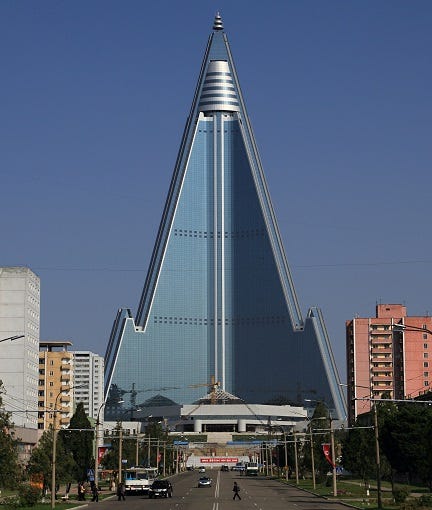
McFarland: That was about the Ryugyong Hotel - it was really two different jokes - and she was laughing, but like with the camps, tough to figure out whether or not she understood that I was kidding.
Mockingbird: The Ryugyong is the weird looking hotel they’ve been working on forever right?
McFarland: That’s right. They started construction on it in the late 1980s, and it’s still not finished. It wasn’t on our sightseeing agenda, but we drove by it a few times on the way to other spots. You can’t miss seeing it even if you tried. The thing is over a thousand feet tall, and it dominates the Pyongyang skyline.
Mockingbird: What were the jokes?
McFarland: Well, the first time we drove by it, I told Min-ji that we have something similar in downtown Murfreesboro and showed her a picture of the City Center building. She was laughing pretty hard, so I assume she found it funny. I explained that even though our building isn’t nearly as tall as the Ryugyong, it’s still similar in an aesthetic sense, because of the way it towers over everything else around it.
Mockingbird: What was the other one?
McFarland: This was another situation where she might have thought I was being serious. I was asking her about the work on the Ryugyong having dragged on for so many years, and unlike with the camps, she wasn’t really evasive, but said that Kim Jong Un wanted to make sure everything was perfect before it officially opened for business. I told her that with my background in construction, maybe I could help them get the project finished. She smiled but didn’t laugh and asked if I could submit an official proposal to their planning and engineering directors.
Mockingbird: Maybe they’ll end up hiring you and renaming it the McFarland Hotel.
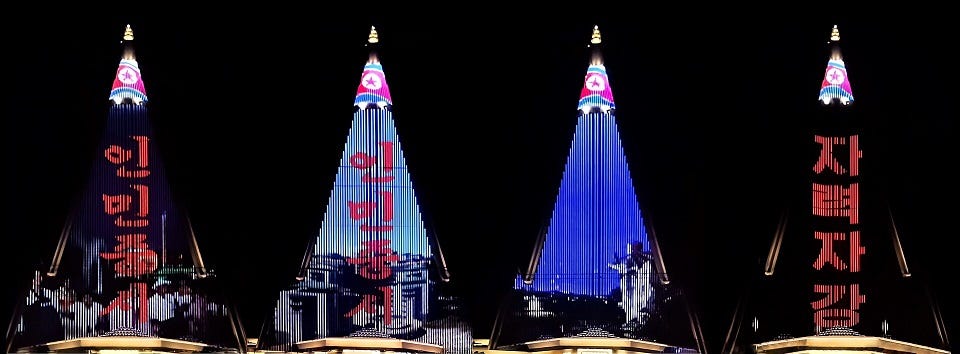
McFarland: (laughing) That’s a great idea! Although sadly the truth of it is that there’s not much I could do with it anyway, and it’s unlikely that it ever opens. They’ve made so many mistakes over the years that are just not fixable - not to mention the basic design flaws that were there from the beginning. But the government will never admit the mistake, so they keep the idea of it going. In the meantime, they’ve at least found a practical use for the building, which is using the sides of it to show propaganda films and slideshows at night.
Mockingbird: Speaking of propaganda, you already mentioned the lecture about Kim Il Sung. Did your tour of Pyongyang include the statues of him and Kim Jong Il?
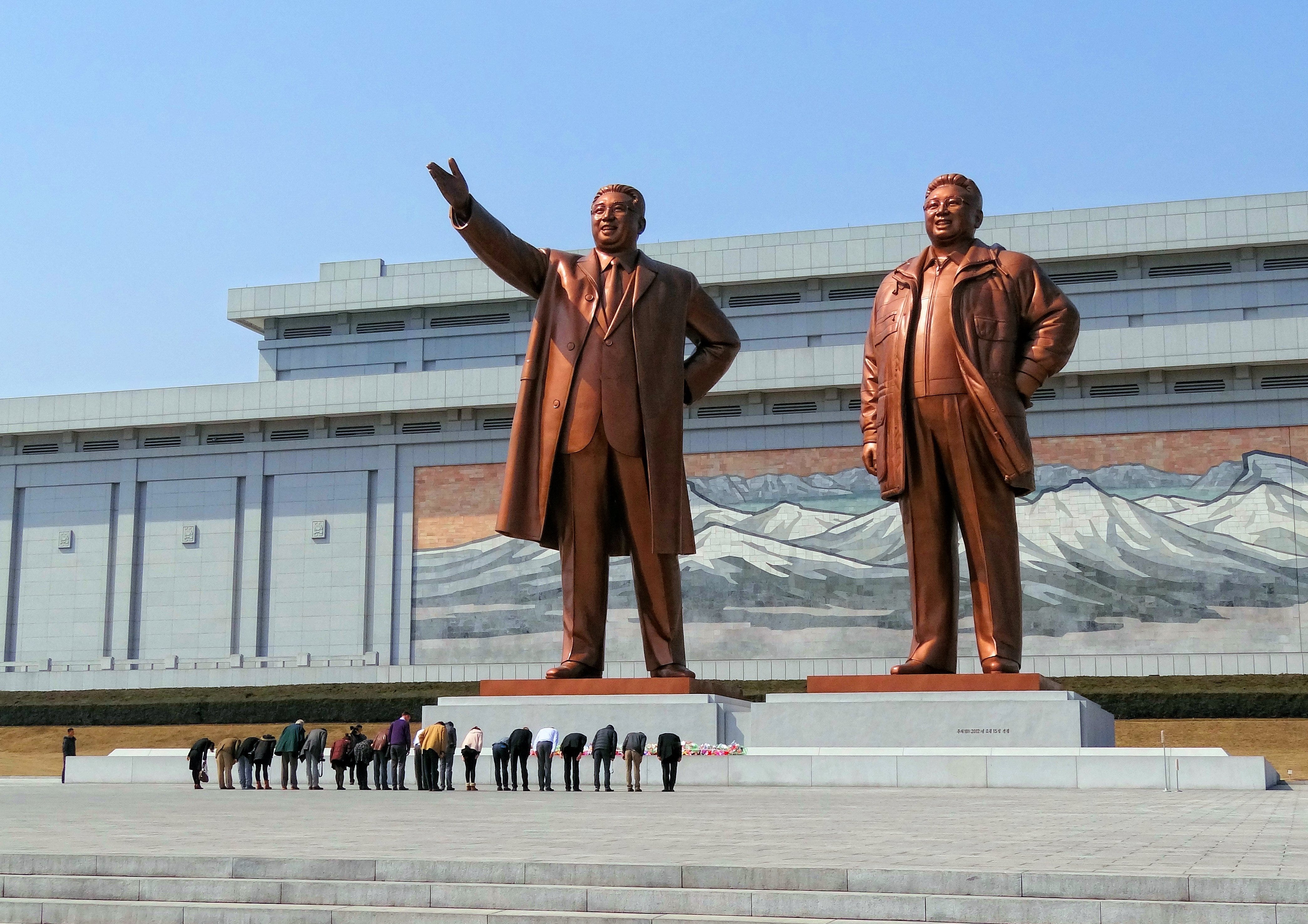
McFarland: The two big ones? Oh yes, they’re very proud of those, and they’re actually part of this massive plaza area that’s called the Mansu Hill Grand Monument. They built it in 1972 for Kim Il Sung’s 60th birthday. The statues are the central focus of it, and that’s what everybody talks about, but there are other parts too. Sculptures, murals, other smaller statues - and everything designed to promote either the worship of Great Leader and Dear Leader or the working class struggle and other communist themes.
Mockingbird: Were there other visitors besides yourself there at Mansu Hill?
McFarland: Probably more people than anywhere else we went, but it wasn’t what you would really call a crowd. Most of them were North Koreans from other parts of the country; it’s a big deal for them to visit the Monument, and for a lot of them, it was also their first time visiting the capital. Not very many foreigners. There was a family from Sweden and some college students from Belgium, but I was the only American.
Mockingbird: And they make you bow to the statues, right?
McFarland: Not exactly. When we arrived there, Min-ji said that it was “encouraged” but not required for me to bow. Basically, what they want you to do is buy flowers (ridiculously overpriced of course) and place them at the base of the statue, and they “request” that you also bow before the two Kims to show respect.
Mockingbird: And did you honor their request with flowers and bowing?
McFarland: Yes I did, and I have to say in all honesty that it was one of the best and most memorable experiences of my entire life. My initial attitude was sort of OK, I’m going to do what they want and go through the motions of showing respect just to be polite. And also, I should mention that I was still constipated, so bending over like that was giving me cramps. But I did it anyway since I didn’t want to jeopardize our chances of establishing the sister city relationship. And what ends up happening is that while you’re bowing before these massive imposing figures of the two senior Kims, you begin to feel this kind of mystical and spiritual connection with them, as if both Kim Il Sung and Kim Jong Il are present - almost like they’re having a conversation with you. It’s an exhilarating moment but difficult to explain to someone who hasn’t been there. The only other life experience that I could compare it to would be the joy and elation I felt when I was elected student government president at MTSU.
The interview with Shane McFarland about his experiences in North Korea will be continued in Part Two.